

Home / Blog / 3D Printing & Microfluidics
3D Printing & Bioengineering3D Printing and Microfluidics: An Intern’s Journey at Medsby, Coimbatore

Quick answer
3D printing is additive manufacturing: it builds objects layer by layer instead of cutting material away. Microfluidics is the science of guiding tiny amounts of fluid through channels as fine as a human hair. Together, one creates the structure and the other gives it life.
- 3D bioprinting uses bioinks to create tissue-like structures.
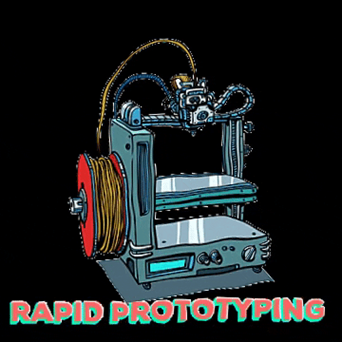
- Rapid prototyping turns a sketch into a physical part within hours.
- At Medsby in Coimbatore, interns learn both technologies hands-on.
The first time I came across 3D printing, I imagined a machine turning an idea into reality. As a Nanobiotechnology student, the process reminded me of the bottom-up approach: start with something small and gradually build something larger. This is the story of how I came to love 3D printing and microfluidics during my internship at Medsby, Coimbatore.
What Is 3D Printing? Building Layer by Layer
In simple terms, 3D printing is an additive manufacturing process. Unlike traditional manufacturing, which cuts away material from a larger block, 3D printing builds an object layer by layer. It deposits and stacks material until the final product is formed.

Perhaps that’s why I like 3D printing so much. It builds the same way growth happens in life: not all at once, but layer by layer, day by day, one step at a time. Just like how success is built.
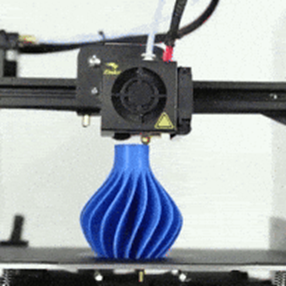
The term “3D” always scared me and sounded complicated. But the more I learned, the more I realised that its beauty lies in making the complicated possible.
3D Printing at Medsby: From Idea to Prototype
That is how I 3D printed a very complicated microfluidic chip structure on my own here at Medsby.
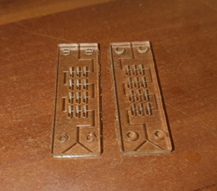
As a student who has taken part in various hackathons, I have seen how valuable 3D printing can be. Sometimes an idea exists only as a sketch on paper or a late-night discussion among teammates. Within hours, the same idea can become a physical prototype. This is called rapid prototyping, and there is something incredibly satisfying about watching your design, your vision, come to life slowly, layer by layer.
3D Bioprinting: When Printing Meets Biology
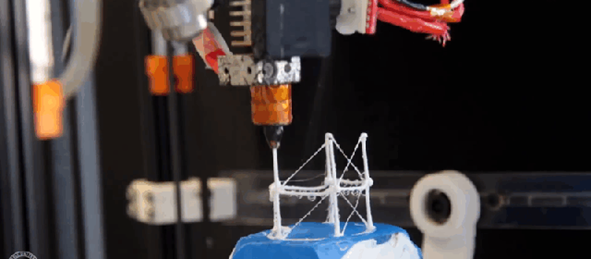
This technology does not stop at plastics and prototypes. In biomedical engineering, 3D printing has evolved into 3D bioprinting, which uses bioinks to create tissue-like structures.
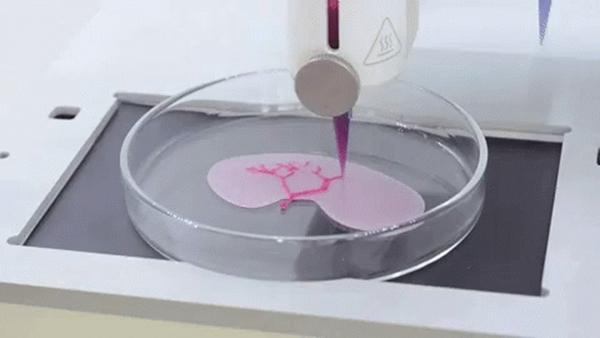
I still remember seeing concepts like this on my favourite show, Grey’s Anatomy, and thinking of them as futuristic ideas that only belonged on television. I am beyond grateful to have had the opportunity not only to observe, but to work on this brilliant technology.
What Is Microfluidics?
The more I learned about 3D printing, the more I found myself asking a simple question: what happens after the structure is built?
As someone who loves books, I like to think of it this way. If 3D printing is writing a book page by page, microfluidics is the story flowing through it. One creates the structure; the other gives it life.
Imagine a human hair
Now imagine a channel as fine as that, or even finer, capable of guiding tiny droplets of fluid with extraordinary precision. That is the wonderful, perfect world of microfluidics, and it is the idea behind lab-on-a-chip devices used for diagnostics and research.
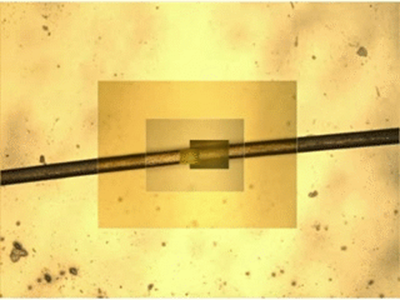
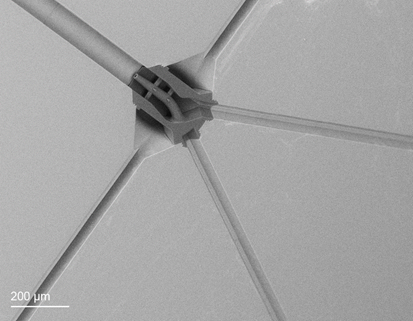
What fascinated me most about this concept was its scale. Some of the most powerful technologies do not demand attention because of their size, but because of their impact.
What Small Things Teach Us About Innovation
Microfluidics taught me something we often forget: you don’t have to do something big to make a difference. Sometimes the smallest actions, the quietest efforts and the things no one notices at first create the greatest impact, much like fluids flowing through tiny channels, where meaningful change happens in places we least expect.
Between learning about these two concepts, one thing stayed with me: innovation is not always about doing something bigger. Sometimes it is about thinking differently, building patiently and recognising the potential in the smallest details.
My Internship at Medsby, Coimbatore
Project Engineering Intern, Medsby
A few years ago, 3D printing and microfluidics felt like science fiction to me. Today, through my internship at Medsby in Coimbatore, I get to learn about them first-hand. What was once a storyline on Grey’s Anatomy is now a field I get to explore.
That is what excites and inspires me most: not just the technology itself, but the opportunity to learn from it, contribute to it and be a small part of the future it is helping to create. Beyond grateful!
If you are a student, researcher or startup in Coimbatore or anywhere in Tamil Nadu who wants to prototype an idea, see our 3D printing services or explore industrial training at Medsby.
Frequently Asked Questions
What is 3D printing?
3D printing is an additive manufacturing process that builds an object layer by layer by depositing and stacking material until the final product is formed, unlike traditional manufacturing that cuts material away from a larger block.
What is 3D bioprinting?
3D bioprinting is a form of 3D printing in biomedical engineering that uses bioinks to create tissue-like structures.
What is microfluidics?
Microfluidics is the science and technology of controlling tiny volumes of fluid in channels as fine as, or finer than, a human hair, guiding droplets with extraordinary precision.
How are 3D printing and microfluidics related?
3D printing can build the physical structure of a microfluidic chip, and microfluidics gives that structure its function by controlling how fluid moves through the channels.
Can 3D printing be used to make microfluidic chips?
Yes. Complex microfluidic chip structures can be 3D printed, and our project engineering intern at Medsby in Coimbatore has printed one.
Where can I get 3D printing services or hands-on training in Coimbatore, Tamil Nadu?
Medsby, based in Coimbatore, offers 3D printing services and works with students and colleges across Tamil Nadu and India through industrial training and internships.
Project Engineering Intern, Medsby, Coimbatore | B.Tech Bioengineering student
Niilee is currently pursuing a B.Tech in Bioengineering and has always been someone who loves learning. Whether through books, conversations, new experiences or scientific discoveries, she enjoys understanding how things work and exploring ideas that challenge her to think differently. Curiosity has always been one of her biggest motivations, and it is what drew her towards fascinating technologies like 3D printing and microfluidics in the first place.

Founder & CEO, Medsby Healthcare & Engineering Solutions
Guruprasandh is the founder of Medsby, a Coimbatore-based manufacturer and technology service provider established in 2014, specializing in wearable technology, healthcare devices, and 3D printing. With over a decade of experience in healthcare technology and engineering, he is committed to knowledge sharing, upskilling, and educational training for students and young innovators.
Keep exploring
Have an idea to prototype?
Talk to the Medsby team in Coimbatore about 3D printing, prototyping or training for your college, lab or startup anywhere in India.
3D printing services Talk to our team